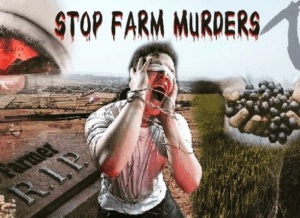
Home › Forums › ATTACKS AND MURDERS ON OUR SOUTH AFRICAN FARMERS. › KILL THE FARMER……Genocide by Stealth: A Hidden and Insidious Threat – Part I of II Nicole Barlow
- This topic is empty.
Viewing 1 post (of 1 total)
-
AuthorPosts
-
2025-03-31 at 13:58 #464538
 Nat QuinnKeymaster
Genocide by Stealth: A Hidden and Insidious Threat – Part I of II
Nicole Barlow
The term genocide typically evokes images of the most horrific atrocities in human history – mass killings, concentration camps, and massacres that leave a lasting scar on humanity’s collective memory.
Yet, as we progress into the 21st century, genocide continues to unfold in ways that are often more subtle, insidious, and less overt than the tragedies of the past. In an age of advanced technology and heightened global awareness, the challenge now is not only to recognise these evolving forms of genocide but also to develop more effective, nuanced methods of prevention and intervention.
It is unlikely that we will witness another genocide on the scale of the Nazi regime or the Rwandan massacre – events so large and so visible that their shockwaves are still felt today. The nature of genocide, however, has shifted. It is no longer confined to the brutal, overt violence of the past. Instead, it often unfolds through a complex web of social, political, and economic forces, in which violence is not always the first tool of choice.
What we are witnessing now is often what I describe as “genocide by stealth,” where destruction happens through exclusion, discrimination, and gradual erosion of rights and freedoms.
The advent of technology, particularly social media and smartphone cameras, has fundamentally altered how the world witnesses and responds to violence. Conflicts, such as Israel’s military actions in Gaza, are now immediately visible to a global audience, which forces political leaders to consider the potential international backlash before taking actions that could escalate into further violence.
This exposure has made it harder for genocidal acts to unfold without consequence, but it has also raised new challenges for those seeking to prevent such atrocities.
Official Classification of Genocide
The 1948 Convention on the Prevention and Punishment of the Crime of Genocide offers a formal definition of genocide, which includes:
1. Killing members of the group;
2. Causing serious bodily or mental harm to members of the group;
3. Deliberately inflicting conditions that could lead to the group’s physical destruction;
4. Preventing births within the group;
5. Forcibly transferring children of the group to another group.
While this definition remains vital, it is increasingly seen as insufficient in addressing contemporary forms of persecution. The act of genocide has evolved, and the challenge now is to expand our understanding of what constitutes genocide in today’s world.
Dr. Gregory H. Stanton, the President of Genocide Watch, has produced a model known as the “Ten Stages of Genocide,” which outlines how genocides typically unfold.
His stages are not necessarily linear and can occur simultaneously. The ten stages are: Symbolization, Discrimination, Dehumanization, Organization, Polarization, Preparation, Persecution, Extermination, and Denial. By analysing these stages, we can better understand how modern genocides develop and, crucially, how they can be prevented at various stages.
South Africa’s Struggle with Identity and Division
In the context of South Africa, we can see several of these stages playing out, albeit in a complex and contested environment. Symbolisation occurs when individuals or groups are labelled with negative stereotypes or demonised based on their ethnicity or historical actions.
In South Africa, there has been ongoing social and political discourse that often places the white population in a perpetual state of guilt, branded as “apartheid beneficiaries,” and held collectively responsible for the actions of their ancestors. While this may be a necessary component of reckoning with the country’s past, it can also deepen societal divides when taken too far.
Discrimination, now clearly evident in South Africa, particularly with the ANC government’s implementation of policies that favour one racial group over another. Although these policies are often framed as efforts to redress past injustices, the implementation of numerous laws and policies targeting minorities raises troubling questions. Are these laws truly about justice, or part of more extreme actions designed to diminish or even eliminate certain groups, at the very least from participating in society and the formal economy?
Dehumanisation is perhaps most pronounced today, particularly in the way certain groups, particularly white South Africans, are portrayed in broader society and on social media. Harsh rhetoric, such as derogatory terms used on social media and in public discourse, serves to dehumanise entire segments of the population. When people are reduced to nothing more than “pigs” or “neanderthals,” it becomes easier to justify discrimination and even violence against them. This kind of rhetoric, as seen in controversial statements by public figures, further deepens existing tensions and divisions.
In terms of Organisation, one could argue that the South African government, through either incompetence or intentional neglect, has failed to adequately protect its citizens from the growing threats posed by criminal gangs and violent unrest.
While the government’s intent may not be to directly target specific groups, the lack of intervention in addressing rising violence – especially against farmers – has contributed to a climate of insecurity. On a per capita basis, South African farmers face a higher likelihood of being tortured and killed than any other demographic, a situation that should not be ignored.
Polarisation and Persecution are also starkly visible in South Africa’s political landscape. The ongoing rhetoric from figures such as Julius Malema, who openly performs the song “Dubul’ ibhunu” (which translates to “Kill the Boer”), has raised significant concerns. This call for violence, though often excused as political expression, perpetuates hatred and division, yet has not been classified as hate speech by the legal system.
Meanwhile, symbols such as the apartheid flag – an emblem of the country’s painful past – have been banned, leading to an inconsistency in how different forms of hate speech are handled by the judiciary.
The media plays a critical role in this dynamic, with major outlets frequently amplifying narratives that cast white South Africans as villains while portraying black South Africans as perpetual victims. This “villain versus victim” narrative, whether consciously or unconsciously perpetuated by journalists, fosters division and resentment, preventing the country from healing from its past.
A Call for Compassionate Reflection
As we move forward, it is crucial to acknowledge that the situation in South Africa – like any other context where tensions are high – requires a delicate, compassionate approach.
However, South Africa’s experience highlights the complexities of modern-day genocide, which may not always involve mass killings but can manifest in the slow, systematic erosion of a group’s rights, dignity, and very existence.
The international community must recognise this evolving form of genocide and act early – before it’s too late – to prevent further harm. Only by understanding the signs and stages can we hope to stop genocide in all its forms, wherever it may occur.
Image courtesy of Alice VL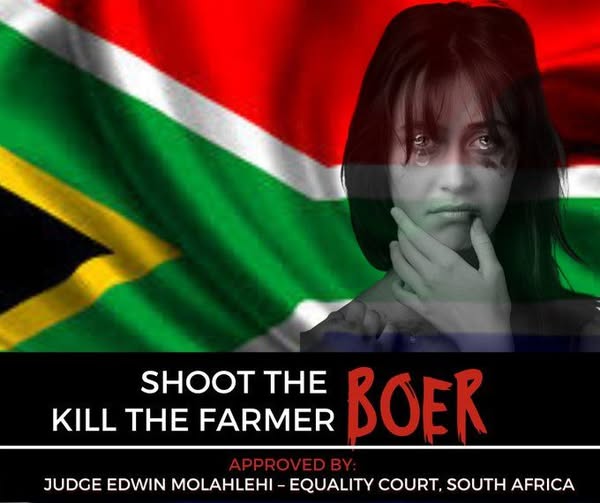
-
AuthorPosts

Viewing 1 post (of 1 total)
- You must be logged in to reply to this topic.