African National Congress (ANC) Secretary General Fikile Mbalula has issued a stern warning against party members singing the controversial song “Kill the Boer”, despite a Constitutional Court ruling protecting it as free speech.
Mbalula made the remarks while referencing President Cyril Ramaphosa’s recent visit to the White House. He recounted how the president was “hit by a movie” during his trip, alluding to a contentious moment involving the song.
“The president of the country went to the White House, and you watched it live on television… and then he was hit by a movie there about Malema and ‘Kill the Boer’—as the ANC we sang that song,” Mbalula said.
However, he firmly declared that “no member today will be allowed to sing ‘Kill the Boer’—simple as that.” He dismissed the Constitutional Court’s past rulings on the matter, questioning, “Even if the Constitutional Court said you can say it, why should we kill the Boer in a democratic dispensation?”
Controversial History of the Song
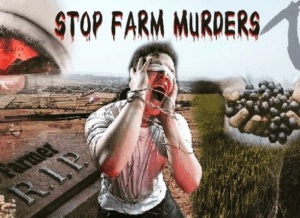
The song, “Kill the Boer” (Afrikaans for “Kill the Farmer”), has long been a point of political and legal contention. While the ANC and the Economic Freedom Fighters (EFF) have defended it as part of liberation struggle heritage, critics argue it incites violence against white farmers.
In 2022, the Constitutional Court ruled that singing the song did not constitute hate speech, citing its historical context. However, Mbalula’s latest remarks suggest the ANC may be distancing itself from the chant amid growing international scrutiny and domestic tensions.
Political Reactions
Political analysts suggest Mbalula’s statement could signal a shift in ANC rhetoric ahead of the 2026 elections, as the party seeks to project a more moderate image. The EFF, led by Julius Malema—who has frequently led the chant—has yet to respond.
Opposition parties, including the Democratic Alliance (DA), have welcomed Mbalula’s stance but questioned its sincerity, given the ANC’s past reluctance to condemn the song.
What’s Next?
While Mbalula’s directive is not an official policy change, it raises questions about internal ANC discipline and whether the party will enforce a ban on the song at rallies. With South Africa’s democracy at a crossroads, the ANC’s handling of divisive rhetoric will be closely watched.